
Monterey Coast Realty News
Five Steps of Rainwater Harvesting
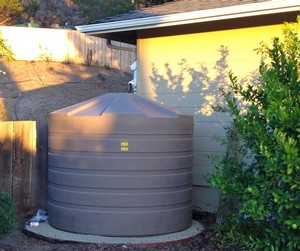
Store Water for Summer Use and Remove Water from the Base of Homes
Store Water for Summer Use and Remove Water from the Base of Homes
As the west coast welcomes in Pacific storms, millions of gallons of water are being deposited around homes, flowing underneath them, and running to sea. The emerging trend of rainwater harvesting provides more than just water conservation for the drier summer months; it allows for the containment and direction of water that can be damaging to homes.
A roof is a flat broad surface that captures a lot of water. A 1,500 foot section of roof can yield 935 gallons with 1" of rain. Here is a resource on calculating rainwater harvesting.
Beyond rainwater harvesting, think about how much water is being deposited around the base of the home? During the course of an average year in Carmel it could be 18,000 gallons!
I have a rainwater catchment system that harvests 4,500 gallons per year. It was develop and installed with the help of Garden Solutions Landscaping. Here are some quick guidelines with rainwater harvesting:
- Direct: Establish gutters and direction to guide and capture your rooftop water.
- Capture: A downspout, debris/leafeater/filter and overflow system should be installed at each catchment base.
- Collect: A cistern or storage tank can be as simple as a 50-gallon rain barrel to a more complex array of tanks. I have a 1,300-gallon main catchment tank.
- Store: The tanks need to be able to capture and move the water where desired. Personally, I catch in the main tank, and then pump to two additional 1,600-gallon storage tanks.
- Use: As the summer heats up, I've created a gravity flow system on automatic timers to water my 22 fruit trees. Having a system of spigots also allows for hooking up a hose to water other areas. Last, having a pump allows me to move water to different locations under high pressure if needed. I can even wash my cars!
Beyond protecting your home, reducing runoff, being environmentally sound, and saving money on your water bills during the summer, there are many rebates and incentives for rainwater catchment.
Once you move towards capturing rainwater, you will be looking for new ways to use and more ways to store the winter's bounty of rain. My tanks were full this year by November! After all, "water is the new gold."
More posts by Mark Peterson
Is Now a Good Time to Buy or Sell a Home? Yes: Annual Sales Numbers In December Continually Beat August.
Many visiting see real estate "For Sale" signs on homes and ask, "Why are there so many homes for sale? Is it unusual?" Looking at the past year's data of new listings by month and market, we can see that the answer is no.
Competitive Price Points for Monterey Peninsula Real Estate Markets
The Monterey Peninsula is made up of several different cities and communities each with unique character and market dynamics. With a deep understanding of each of these markets, this report groups the Monterey Peninsula as Carmel, Pebble Beach, Pacific Grove, Monterey (+ Del Rey Oaks), and Seaside (+ Sand City).
Sold in Five Days: But Five Months of Work

Hearing that houses “Sold in Five Days” makes the work seem like a quick and easy job. But even when selling quickly, most still require five months of work.
Is this Home a Good Buy?
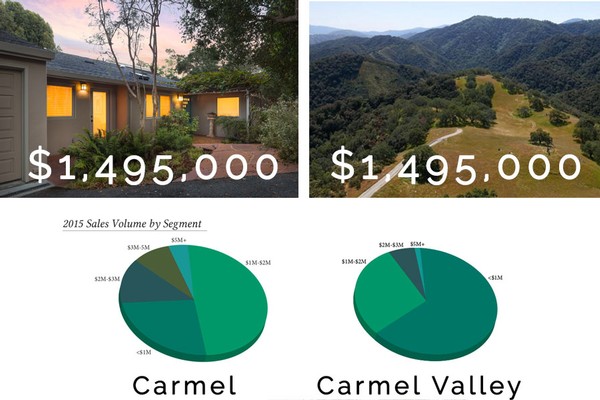
Recognizing context and the value of subjective and objective criteria in real estate
"Is this a good buy?" or "Are prices going to go up/down?" are some of the most common questions to real estate professionals. For realtors and for homebuyers, context and the standardizing of variables weighs into real estate evaluations, answers and decisions.
Five Things to Consider When Seeking a Remodel